
REAL-TIME RESEARCH? MORE LIKE FRONT LINE RESEARCH.
In Litigation Research, Real-Time Insights Shouldn’t be an Afterthought
For years, attorneys prepping for trial have relied on litigation research to gauge how their juries might respond to the arguments and evidence on the stand. Their hard nights of work served a noble purpose; offering verdict percentages, thematic rankings and retrospective questionnaires that helped refine strategies before the court date. But as we settle into 2026, the terrain of litigation research has been going through a bit of terraforming.
Static snapshots of juror preferences can’t satisfy the complexity of modern litigation narratives; what legal teams increasingly need — and what litigation research technology can now deliver — is real-time, moment-to-moment insight into how jurors respond as a story unfolds.
This shift mirrors broader trends in data-driven research across various disciplines. Just as market researchers track consumer sentiment in real time to optimize messaging and product design, trial consultants are adopting tools that allow them to see when and why participant engagement rises or falls — not just how much it did by the end of a session.
From After-the-Fact to In-the-Moment
Traditionally, post-session surveys and end-of-day polling results have dominated litigation research. Counsel might learn that 52% of participants found the plaintiff’s expert credible, or that a particular theme resonated with 70% of mock jurors. But these metrics miss the temporal dimension of human judgment: the seconds before and after a key testimony, the exact point when sympathy turns to skepticism, or vice versa.
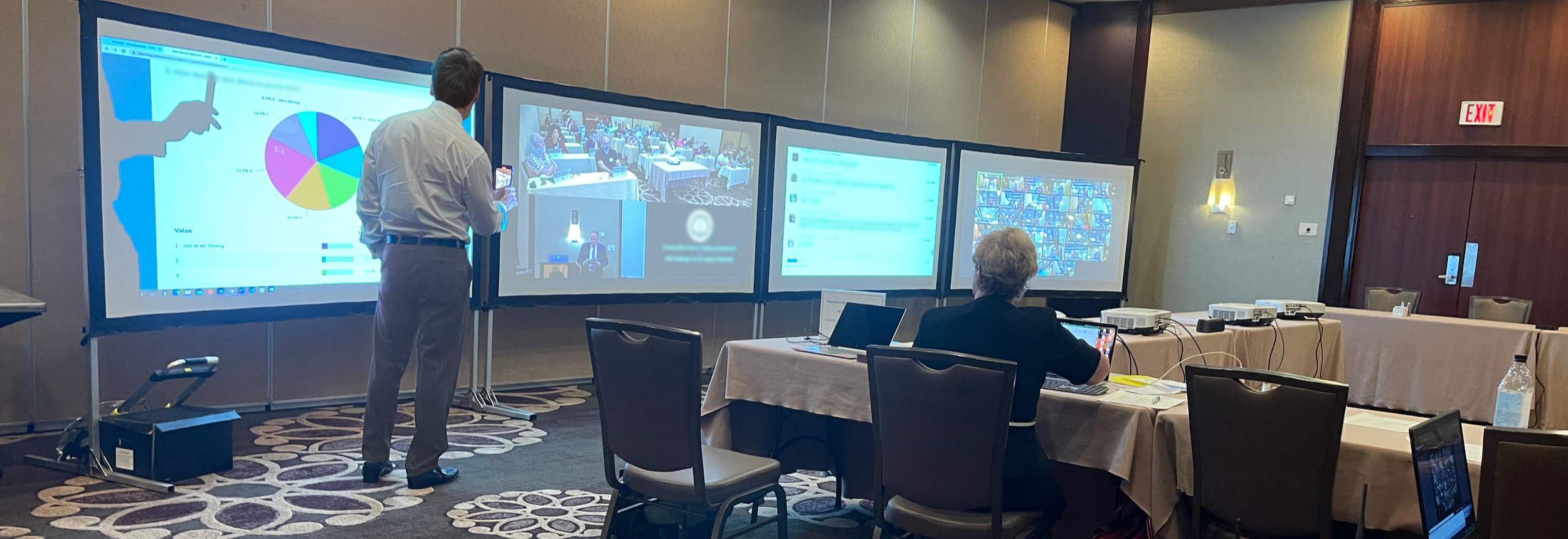
This gap is precisely why tools such as LiveView® Notes matter. By capturing continuous, time-linked sentiments in the form of a constant stream of juror notes, these systems map emotional and cognitive responses throughout a research session in a way that multiple choice questions just can’t.
The legal industry’s embrace of these capabilities is not happening in isolation. Digital transformation in law, from cloud-native litigation support to analytics platforms, has rapidly accelerated in recent years. According to a survey by the American Bar Association, a majority of lawyers now use online research platforms, and the adoption of AI and analytics tools continues to climb year over year.
These technologies are not mere bells and whistles. They reflect a deeper shift in how information is produced, consumed and interpreted. Just as judges now expect briefs backed by comprehensive data analytics, litigators expect research tools to deliver narrative intelligence — insight about how stories land, in the moment.
Why Moment-to-Moment Matters
Human decision-making is intrinsically temporal. Jurors are not static scorecards; they are dynamic processors of unfolding narrative, language, and emotion. A juror might outwardly endorse a theme in a post-session questionnaire, yet have felt confusion or disengagement at a critical witness moment.
Moment-to-moment sentiment tracking brings these subtle inflections to light. In a focus group simulation, for example, traditional surveys might show a high overall level of engagement with plaintiff testimony. But temporal sentiment data could reveal a pattern: a dip in attention when highly technical evidence was presented, followed by a recovery only after a narrative pivot — suggesting a need to simplify or restructure how technical testimony is delivered.
This kind of insight is analogous to real-time metrics in other fields. In political polling and advertising research, dial-testing and continuous response measurement have long given strategists a pulse on audience reaction as messaging unfolds — not just at the end.
The stakes in litigation are unique because the “audience” — a jury — carries legal authority and final say in a matter that can cost millions, affect reputations, or even determine liberty. There is a qualitative difference between knowing that a message later resonated and knowing when it began to resonate — or where it risked disengagement entirely.
The Evolving Litigation Research Ecosystem
Alongside real-time sentiment tools are broader trends reshaping litigation support: cloud computing, AI-guided analytics and remote jury platforms that ensure diverse, geographically representative panels can participate securely online. These developments reflect the legal profession’s gradual evolution toward systems that treat data as central to strategy rather than ancillary to it.
AI tools, for example, can now process vast repositories of case law and extract stylistic and thematic correlations that inform legal arguments. But these text-centric tools address what the law says — not how audiences emotionally and cognitively respond to the stories lawyers craft from those rules.
Real-time sentiment tools fill that gap by converting nuanced human responses into visualizations and signals that counsel can interpret and act on during trial preparation. They complement, rather than replace, traditional qualitative research methods; the most effective strategies still triangulate across surveys, interviews and observational data.
Toward Better Prepared Trials
In 2026’s litigation landscape, any legal team that relies solely on end-of-session metrics is leaving insight — and advantage — on the table. The most compelling research today combines temporal fidelity with qualitative depth, tracking not just responses but reasons behind them.
The result is not voyeurism into the minds of mock jurors, but a more empathetic and precise understanding of how stories communicate, persuade and sometimes falter. For litigators serious about building narratives that resonate, real-time insight is not a luxury. It is a necessary evolution in the craft of persuasion — one worthy of serious debate by the legal profession, and, increasingly, by the courts themselves.