
THE GARAGE IS OPEN: HOW AI GAVE EVERYONE A SOFTWARE SHOP
A New Kind of Builder
Not long ago, if a small nonprofit wanted a custom software tool — something to aggregate field data, flag anomalies, or present findings to stakeholders in a coherent visual form — it faced a familiar calculus: hire a developer, apply for a technology grant, or do without. The barriers were not merely financial. They were architectural. The knowledge required to translate a domain expert's intuition into functional code lived in a separate professional class, spoke a different language, and cost accordingly.
That calculus has been upended with remarkable speed. Across industries, teams with little or no formal engineering staff are now shipping software that, five years ago, would have required months of contractor hours. A public health department in rural Montana built an outbreak-tracking dashboard in a week. A mid-sized architectural firm created a real-time energy-modeling tool for client presentations. A grassland conservation organization — working with the kind of lean headcount that defines the nonprofit sector — built a field-notes platform sophisticated enough to rival commercial alternatives, and did it in a fraction of the time anyone would have predicted.
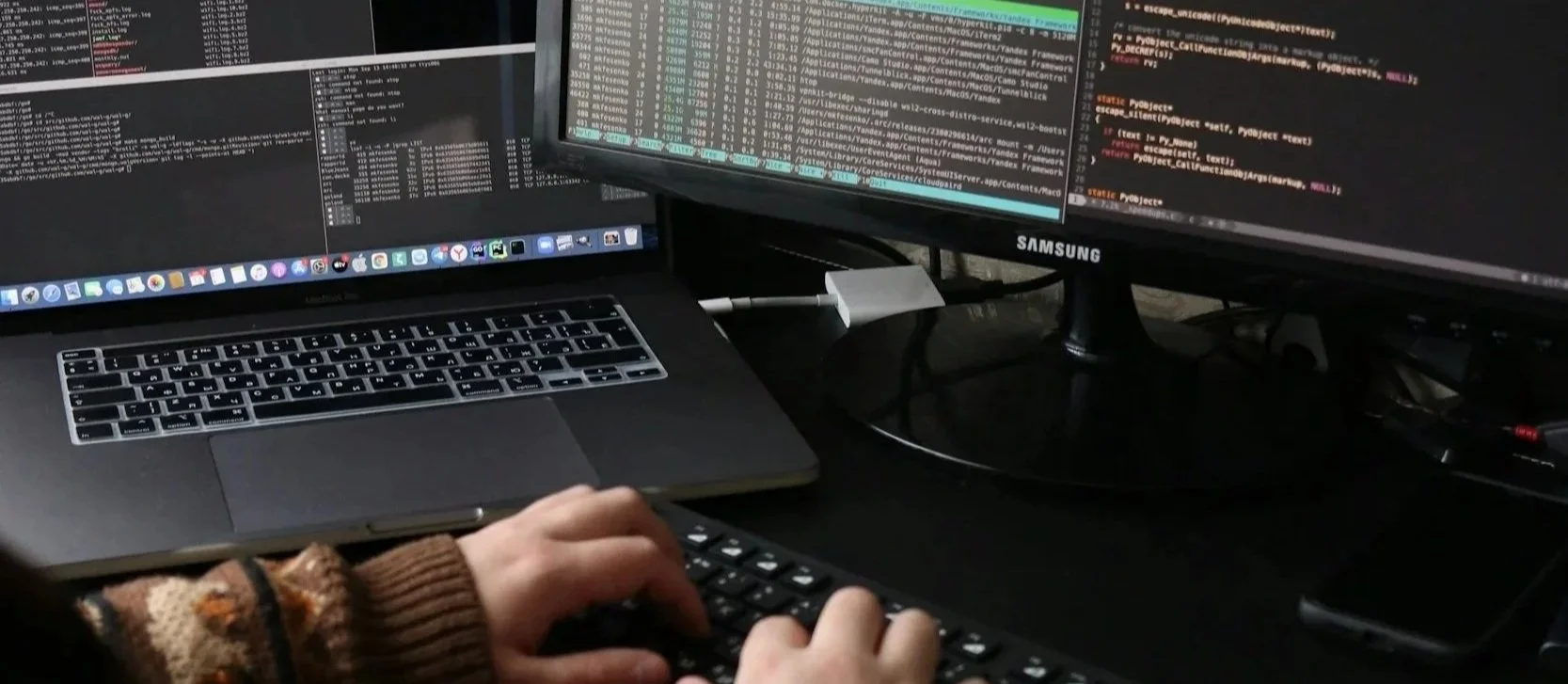
The common thread is AI-assisted development: the practice of using large language models to write, debug, structure, and iterate on code under the direction of a non-engineer who understands the problem deeply but may never have written a line of Python. The programmer's role has not disappeared; it has been redistributed. Domain knowledge, once a passenger in the software development process, has become the driver.
"The person who best understands the problem can now also be the person who builds the solution. That shift is not incremental — it is structural."
— On the democratization of software developmentWhat makes this moment distinct from earlier automation waves is the nature of what is being automated. Earlier tools — no-code platforms, drag-and-drop app builders — lowered the floor for simple applications. They were valuable but limited. The current generation of AI assistants can handle genuine complexity: conditional logic, database architecture, real-time data processing, API integrations, responsive interface design. The ceiling, for the first time, is not the tool. It is the vision.
Research, Reimagined
The implications for research — and for the organizations that conduct it — are difficult to overstate. Science has always been, in part, a tool-building enterprise. Telescopes, spectrometers, statistical software, GIS platforms: each new instrument expanded what was knowable. The development of those tools, however, followed its own slow arc, typically running years behind the conceptual breakthroughs that demanded them.
AI-assisted development compresses that arc. A researcher who identifies a gap in their analytical toolkit can now move from concept to working prototype in days rather than grant cycles. The custom data-collection form that perfectly matches a study's methodology, the automated cleaning script tailored to a specific sensor's quirks, the visualization that communicates a finding in a way no generic charting library can — these are now within reach of any team willing to articulate precisely what it needs.
The near-term implications are already playing out. Field teams are deploying custom mobile data-entry tools that eliminate transcription errors and sync automatically to central databases. Analysts are writing bespoke processing pipelines that would previously have required a postdoctoral programmer. Report generation, long a labor-intensive final step, is being partially automated, freeing researchers to focus on interpretation rather than production.
The longer-term possibilities are harder to map but more consequential. As AI capabilities continue to expand, the class of software that a small, expert team can build will grow alongside them. Predictive models that integrate multiple data sources and real-time field observations — tools that once required a university partnership and a multimillion-dollar grant — are becoming tractable for organizations with the right domain knowledge and the willingness to direct AI toward the problem. The question is no longer whether the tool can be built. It is whether anyone has thought carefully enough about what the tool should do.
LiveView® Notes: A Case in Point
In 2025, FGA's research team confronted a problem familiar to anyone who has managed large-scale field data collection: the gap between what observers record in the field and what analysts can actually use. Notes arrived in inconsistent formats. Critical observations were buried in unstructured text. Cross-referencing a field record with associated imagery, GPS coordinates, and historical context required navigating three separate systems, none of which talked to the others.
The team had a precise sense of what a better system would look like. What it lacked was the means to build one — until it didn't. Using AI-assisted development, FGA built LiveView® Notes: a field observation platform designed specifically around the rhythms and requirements of research. The development process was iterative, guided by researchers who understood the problem rather than engineers who understood software, with AI handling the translation between intent and code.
The result is a platform that consolidates structured and unstructured data entry, links observations automatically to relevant metadata, and surfaces records in a format optimized for both field use and subsequent analysis. Observers in the field interact with a clean, fast interface; analysts see the same data organized for querying and export. Version histories, attachment handling, and collaborative editing — features that would have been negotiated line items in a contractor scope — were simply built in.
"LiveView® Notes did not emerge from a product roadmap. It emerged from a research team that knew exactly what it needed and, for the first time, had the means to build it."
— FGA ResearchWhat LiveView® Notes demonstrates is not merely that the tool was built — it is that it was built right. Commercial field-data platforms are designed to serve many users across many contexts; their compromises are the cost of generality. A custom platform can make different choices. It can be opinionated in precisely the ways the organization requires and flexible in precisely the ways the work demands. The difference, in daily use, is significant.
The platform is also, in a sense, a proof of concept for the broader argument. FGA is not a technology company. It is a research organization. The fact that it built — and continues to iterate on — a sophisticated research software platform reflects something real about what has changed in the relationship between domain expertise and technical capability.
Vision, Not Ceiling
There is a temptation, in writing about new technological capabilities, to let the technology do the leading — to describe what AI can do and imply that the doing is therefore inevitable. That temptation should be resisted. The tools are widely available. What is not widely available is the combination of deep subject-matter expertise, intellectual honesty about what the data actually show, and the clarity of purpose required to direct those tools toward something genuinely useful.
Building a good research tool is, at its core, an act of knowledge. It requires understanding the research question well enough to know what data are needed, how they should be collected, what transformations they require, and what a meaningful output looks like. AI can write the code. It cannot supply the judgment. That remains the exclusive province of people who have spent years engaging with their field, arguing with the data, and refining the questions.
FGA occupies an unusual position in this landscape. Its work spans multiple research methodologies and client sectors, engages with the full complexity of human behavior and decision-making, and operates at the intersection of qualitative depth and quantitative precision simultaneously. That breadth demands tools that can match it — tools that are not available off the shelf and that would not have been feasible to build even a few years ago. They are feasible now.
The organizations that will make the most of this moment are not those that move fastest but those that think clearest. Rapid development is only as valuable as the quality of what is being developed. The vision has to precede the code; the question has to precede the tool. In that respect, the new era of AI-assisted software development does not change what makes research organizations excellent. It simply removes one more excuse for not becoming one.
FGA has the vision. It has the methodological foundation, the client experience, the sector fluency, and now, increasingly, the technical capacity to act on it. The garage is open, the materials are at hand, and the blueprint — assembled over years of careful work at the intersection of research, insight, and action — has been waiting for exactly this moment. What gets built from here is, for once, limited only by the ambition of the people doing the building. ◆