

In research, as in most professions, we inherit our tools long before we question them.
The discussion guide. The deck template. The segmentation framework. The regression model. Each began as a solution to a specific problem — a response to chaos, inconsistency, or blind spots in decision-making. Protocols are born from purpose.
Over time, though, something subtle can happen. The solution becomes standard. The standard becomes doctrine. And doctrine, rarely interrogated, begins to drift from its original aim.
What began as a means quietly becomes an end.
Protocols Have a Purpose
Structures exist for good reason. They create consistency. Consistency builds trust. Trust builds reputation.
Imagine a researcher who runs the same category study three times in a year but shifts recruitment criteria, stimulus exposure, and reporting logic each time. Even if each individual study contains insights, the variability undermines credibility. Patterns can’t be tracked. Benchmarks collapse. The narrative changes with every retelling.
The opposite is chaos.
Standards protect integrity. They communicate seriousness. Your actions build your perception, and perception — fair or not — shapes whether clients see you as disciplined or improvisational.
Without guardrails, you lose identity. If every client receives a totally different version of you, what exactly are they hiring? A methodology? A philosophy? A brand?
Protocol gives you shape. It makes you recognizable. It signals that you are not inventing yourself from scratch every time.
But that is only the beginning of the story.
When Process Becomes the Point

There is a danger in loving structure too much.
If you forget why a protocol exists, it begins to justify itself. The journey becomes self-contained. You complete the survey because you always complete the survey. You produce the 60-slide report because you always produce the 60-slide report. You conduct eight groups because eight groups are what you conduct.
The method becomes sacred.
And yet, thoroughness is not the same thing as relevance. A report can be immaculate and still miss the client’s real question. A segmentation can be statistically elegant and strategically inert. A deck can be visually stunning and operationally useless.
When we perform process for its own sake, we risk mistaking activity for achievement.
In these moments, we begin protecting the protocol to protect our identity. “This is how we do things,” we say, as though repetition guarantees value. But identity is not preserved by rigidity. It is preserved by effectiveness.
A firm known for beautiful decks that do not drive decisions is not known for excellence. It is known for decoration.
Protecting the Ideal
At its core, research has a simple — and difficult — purpose: to understand what people think and why.
That is the telos. The end. The reason the protocol exists at all.
Every structure, every instrument, every analytic choice should serve that aim. If a process creates distance between you and the respondent — if it turns lived experience into sterile data points without illumination — then something has failed. Even if it is only in that one instance.
Likewise, our role is to reduce uncertainty for decision-makers. Insight is not meant to impress; it is meant to clarify. If our methods generate data so dense, so complex, or so jargon-laden that executives cannot confidently act, then the exercise has missed its mark.
Complexity can masquerade as sophistication. But confusion is not value.
The harder work lies in interrogating what drives us as researchers. What do we actually believe about human behavior? About decision-making? About truth? Even if we cannot articulate it cleanly, something shapes our instincts. Something determines which tradeoffs we make when timelines tighten and budgets shrink.
Unexamined motives will surface eventually — often when stakes are highest.
Better to confront them early. To define the ideal clearly. To let it discipline the protocol, rather than the other way around.
Applying the Principle to Modern Research
Today’s research environment rewards agility.
The false choice between qualitative and quantitative work is a prime example of protocol over purpose. These were never meant to be rival camps. They are complementary lenses. When integrated thoughtfully — when qualitative nuance informs quantitative structure and quantitative rigor validates qualitative intuition — the result is not methodological compromise, but methodological clarity.
Flexible integration serves the ideal: understanding people more fully.
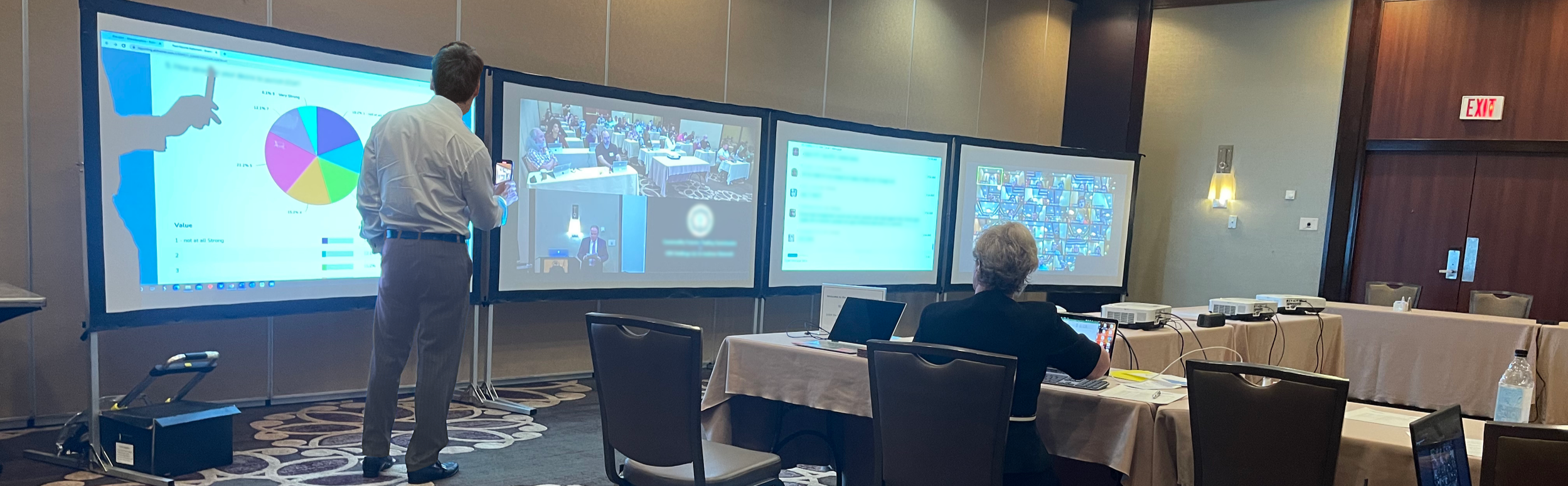
Technology, too, can either entrench rigidity or enable responsiveness. Platforms designed for real-time visibility and iteration allow researchers to pivot midstream, to refine probes, to test stimuli dynamically, to adjust course when early signals suggest a better path. The tool becomes a support for insight rather than a cage for it.
Reporting offers another test case. The canned deck is comforting. It speeds production. It standardizes brand. But custom reporting — shaped by the client’s actual decision horizon — respects the fact that no two business challenges are identical. The insight must meet the moment.
The point is not to abandon structure. It is to apply it intelligently.
The Discipline of Purpose
Protocol is not the enemy. It is indispensable.
But protocol must remain subordinate to purpose.
A methodology is only as strong as its capacity to deliver understanding. A report is only as valuable as the clarity it creates. A brand is only as durable as the outcomes it produces.
The discipline required of modern researchers is not endless innovation nor stubborn consistency. It is something more demanding: the willingness to ask, repeatedly, Why are we doing this? And the humility to adjust when the answer no longer aligns with the practice.
Protocol serves purpose.
Never the other way around.